The best recipe saver apps in 2026, honestly ranked by use case.
We make Hearth, one of the apps below — and every “best recipe apps” page is written by a team with a horse in this race. What we promise instead of neutrality is specificity: named trade-offs, dated facts, and the cases where you should buy someone else's app.
Not a 1-to-10 ranking — those always read as rigged. One winner and one runner-up per real use case.
Six use cases, six honest winners.
TikTok and Reels: Hearth.
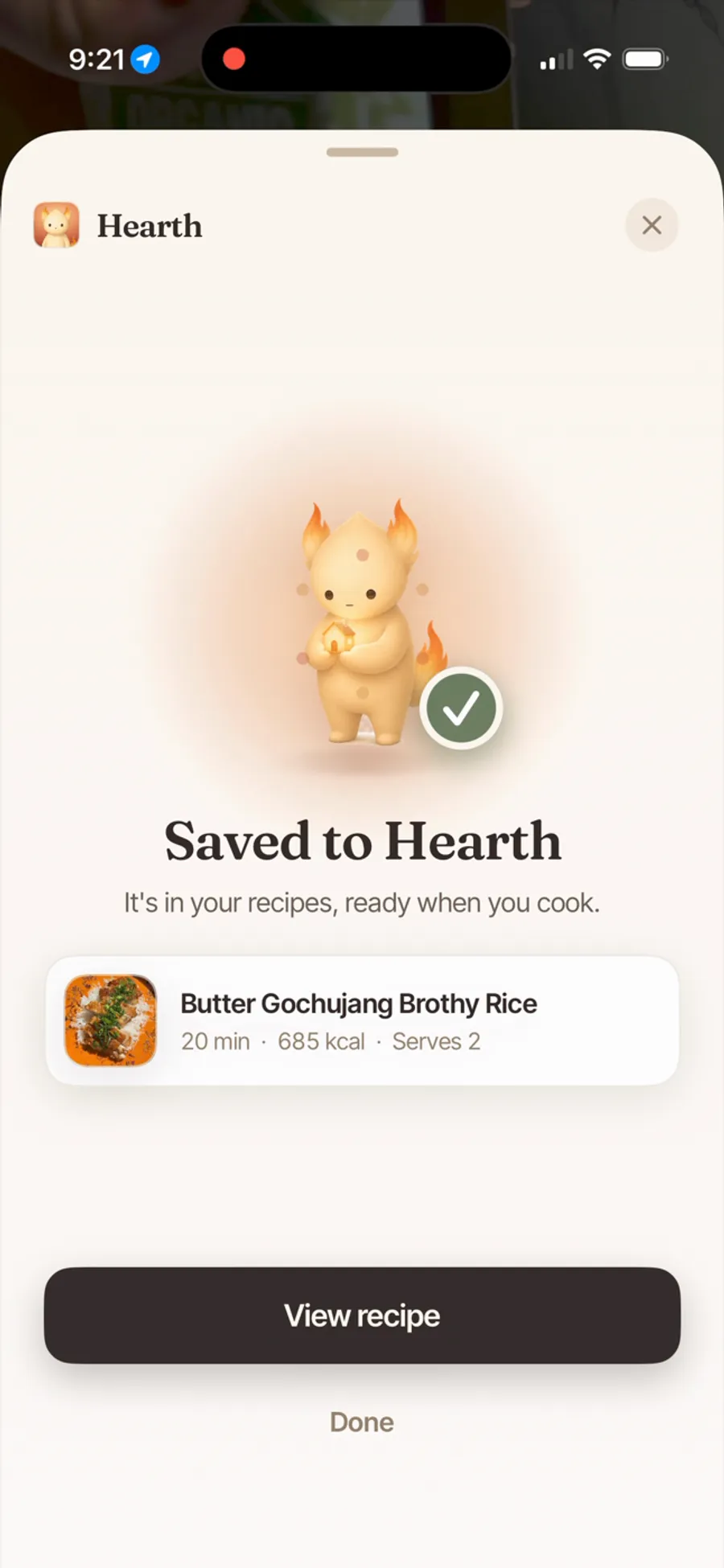
Share-sheet import with a caption → audio-transcription → on-screen-text waterfall, so talk-through videos with empty captions still come out as structured recipes in ~9 seconds. Nutrition included on every import. Trade-off, stated plainly: iPhone-only (iOS 18+).
Runner-up: ReciMe — same import breadth, plus Android and web; weaker on spoken-only videos, no real multi-user household.
Cooking together: Hearth.
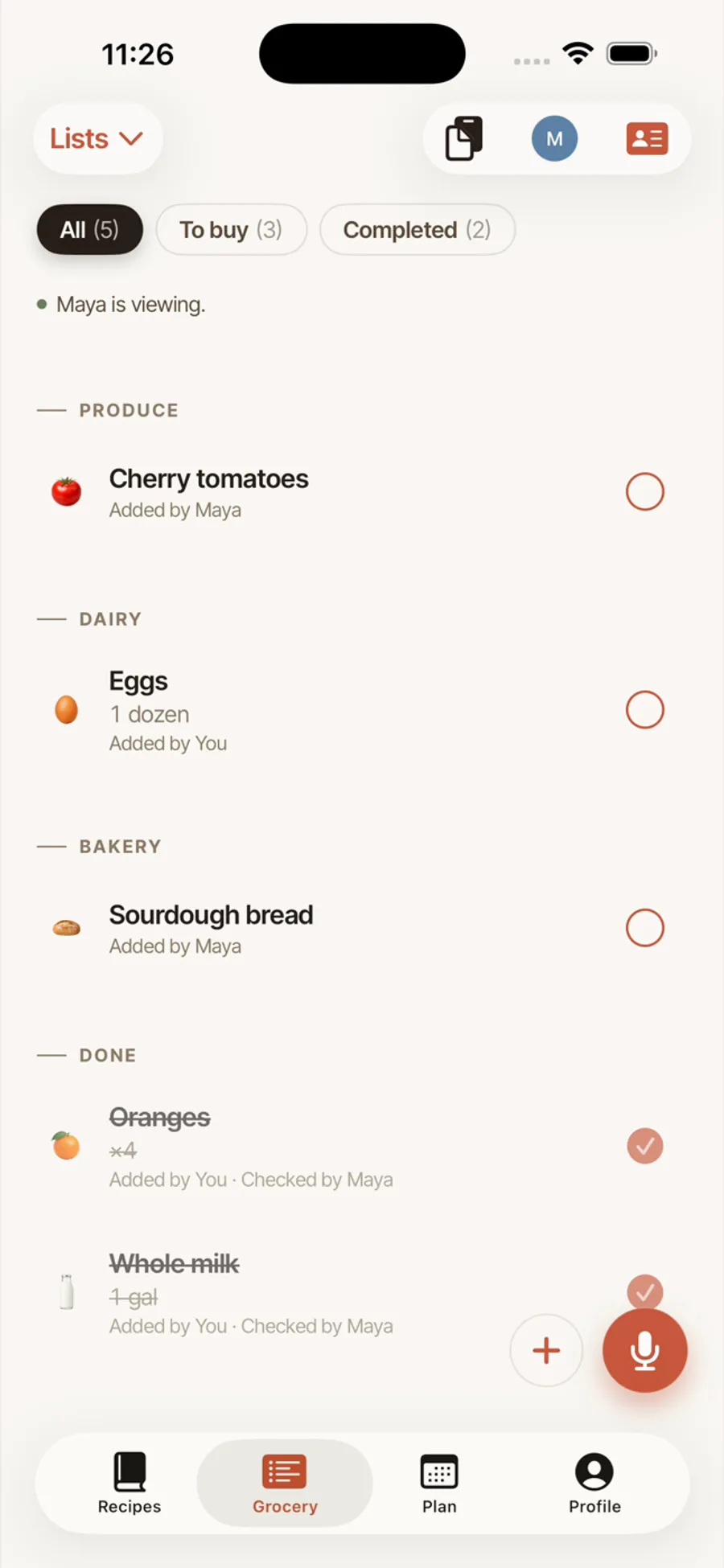
The household layer is the whole point: live lists with added-by and checked-by on every item, voice capture in the kitchen, a shared cookbook, and a plan that fills the list — each person on their own account.
Runner-up: AnyList — if all you want is the shared list, its free real-time sharing is the category's best pure-list deal. Recipe import is web-only.
Pay once: Paprika 3.
The standard for blog imports — bulletproof website capture, aisle-sorted lists, reusable menus, a pantry — sold per platform. No social-video import in v3; Paprika 4's beta announces it.
Runner-up: Recipe Keeper — one-time per platform, and it does import TikTok and Instagram plus OCR scanning: the sleeper pick for pay-once buyers who save from social.
Actually free: Samsung Food.
A genuinely usable free core with one-tap social import on Android, iOS, and web. The honest cost: third-party ads, steady Food+ upsells, and a drift toward Samsung's appliance ecosystem.
Runner-up: Copy Me That — a real free tier for web clipping, now capped at 40 saved recipes before the (inexpensive) upgrade.
Native polish: Crouton.
A one-time unlock and a genuinely gorgeous native app across iPhone, iPad, Mac, Watch, and Vision Pro — cook mode with auto timers, Bluetooth scale and probe support, groceries via Apple Reminders.
Trade-offs: Apple-only, and the Reminders-based list is thin next to a dedicated one. Hearth loses the design-purist vote to Crouton some days — we can live with that.
Planner-first: Plan to Eat.
A subscription with a 14-day no-card trial and no free tier, on principle — their FAQ argues a customer-funded product doesn't need to sell your data. (Hearth takes the same stance.)
Drag-and-drop calendar planning that auto-builds the grocery list; imports from Instagram, Facebook, and Pinterest — but no TikTok.
Our winner, in the wild.
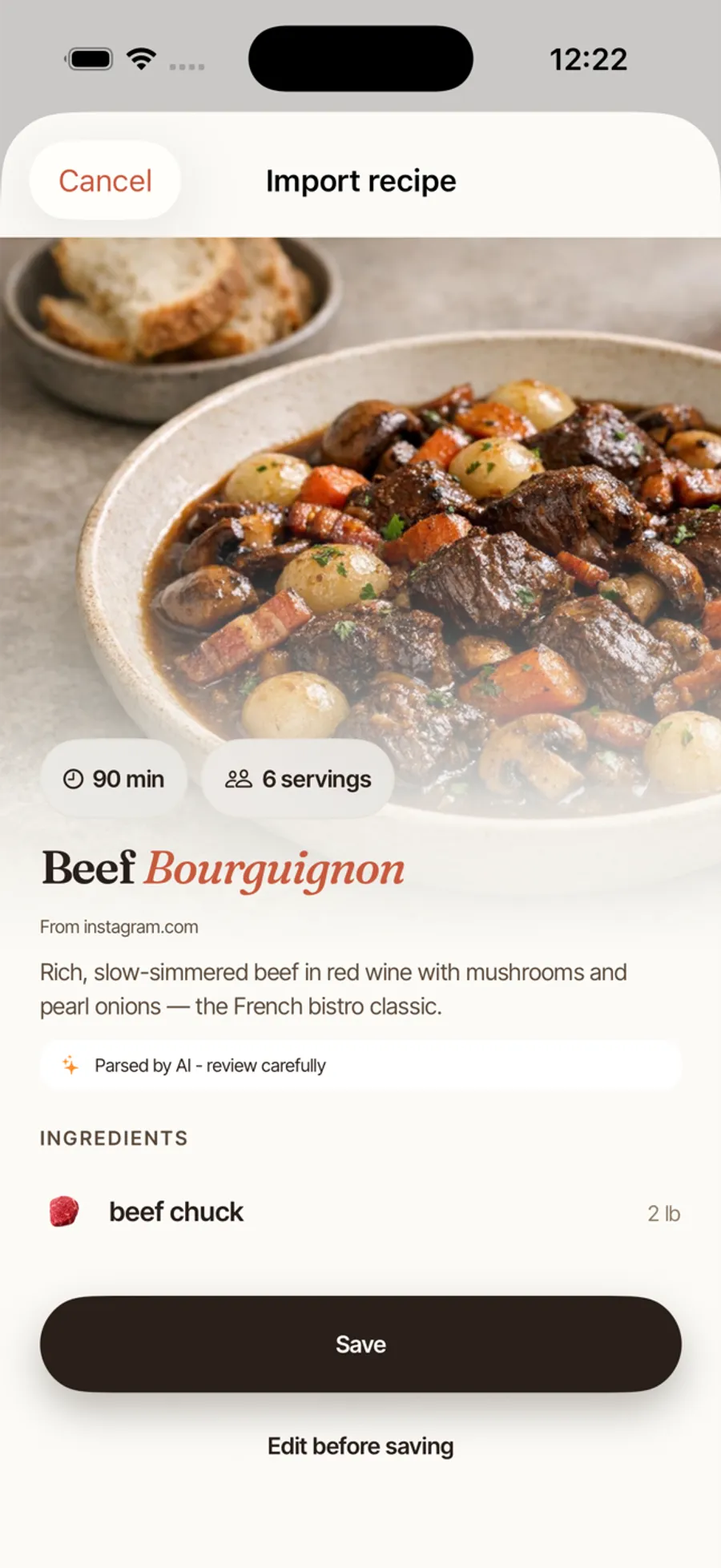
Parsed in ~9 seconds
Ingredients, steps, servings, and nutrition — right in the share sheet, before you save.
Cook mode at the stove
Big type, one step at a time, timers built in — and the screen stays awake.
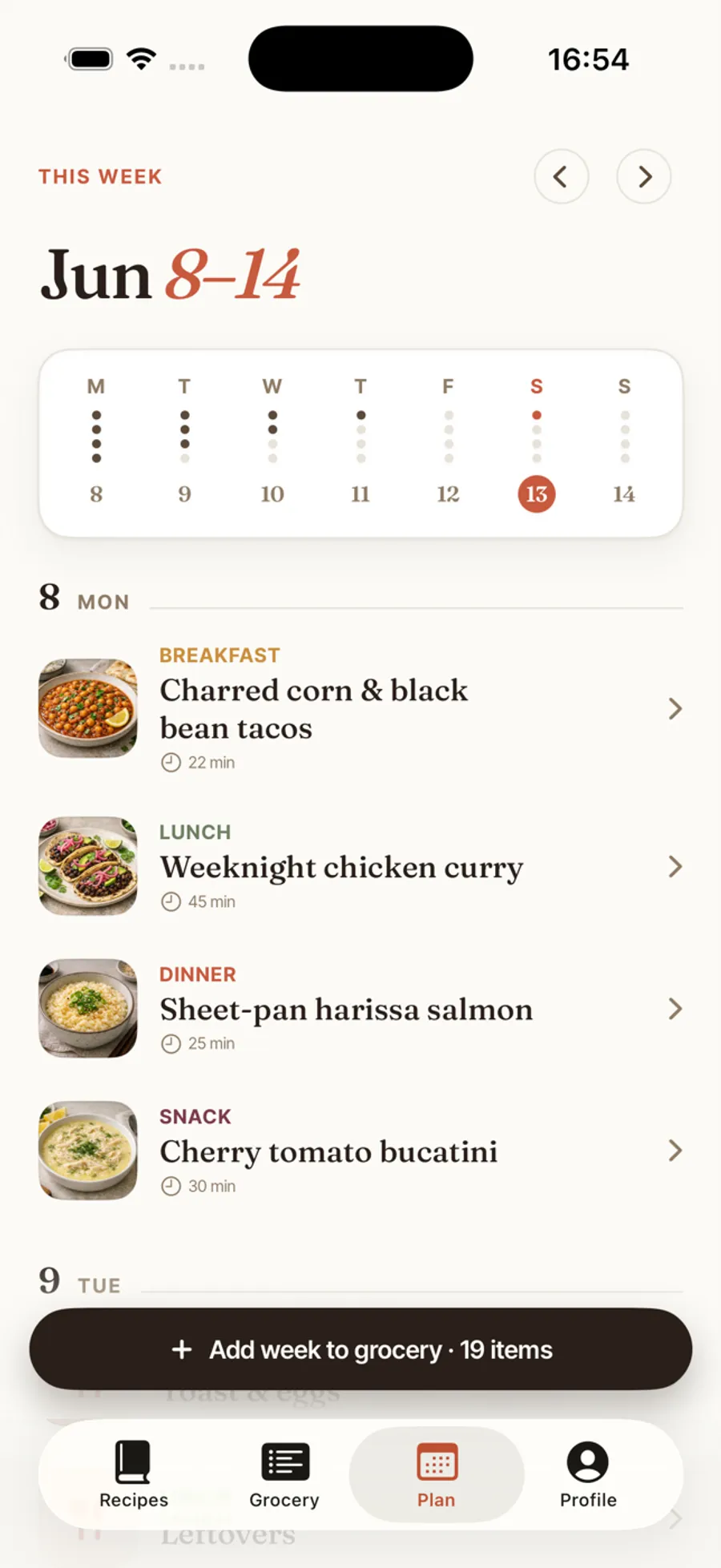
The plan fills the list
A week of dinners becomes one grocery run — 19 items added in a tap.
Four smaller apps on the radar.
Flavorish
iOS, Android, and web; imports TikTok, Instagram, and YouTube; the pitch is AI recipe generation. Freemium — the free tier caps social imports and AI generations.
Umami
iOS and Android; free for the first 30 days, then a subscription (with a lifetime option) that covers up to five family members.
Mela
iOS and Mac; a minimalist’s recipe manager with website, RSS, and book-scanning import — no social video — and groceries stored in Apple Reminders.
CookBook
iOS, Android, and web with a browser extension; imports TikTok, Instagram, Facebook, and Pinterest; the free tier caps you at 20 recipes, 20 imports, and 2 lists.

Every claim was checked in July 2026 against vendor sites, help centers, App Store listings, and dated reviews. No sticker prices on purpose — they go stale fast. If something has drifted, tell us.
Three questions settle it.
1. Where do your recipes come from?
Videos → Hearth or ReciMe. Blogs → Paprika or Plan to Eat. Paper and photos → anything with OCR: Hearth, Recipe Keeper, Crouton.
2. Who else needs the list?
A real multi-person household → Hearth. Just a shared list → AnyList. Only you → everything qualifies; pick on import quality and price model.
3. Subscription or one-time?
Pay-once → Paprika, Recipe Keeper, Crouton. Honest subscription → Hearth or Plan to Eat. Free with trade-offs → Samsung Food or Copy Me That.
And one concession.
“Video recipes + an Android household” currently means ReciMe or Samsung Food, not Hearth. When that changes, this page will say so.
The deeper cuts, if you're narrowing down.
Hearth vs ReciMe, in detail.
The two video-import heavyweights, compared with the concessions left in.
Read the comparison →ComparisonSeven ReciMe alternatives, by complaint.
Import caps, rigid lists, subscription fatigue — matched to the right app.
Read the alternatives →Free to browse300+ recipes, already structured.
See what a Hearth recipe looks like — ingredients, steps, nutrition estimated.
Browse the catalog →Recipe saver apps,
asked and answered.
What's the best app to save TikTok recipes?
On iPhone, Hearth — it transcribes the audio when the caption is empty, so talk-through videos still come out as structured recipes. If you need Android or a web app, ReciMe is the honest answer: the same import breadth, minus the audio tier and the multi-user household.
Are recipe saver apps free?
Usually “freemium”: a free tier with capped imports or saved recipes (ReciMe, Copy Me That, Recipe Keeper) or ads (Samsung Food), and a subscription for the rest. A few charge once per platform (Paprika, Recipe Keeper, Crouton). Hearth and Plan to Eat skip the free tier entirely and charge a subscription — Hearth's trial is 14 days on the annual plan.
Can these apps read a recipe that's only spoken in the video?
Mostly no — most importers depend on written text, and independent reviews note even the biggest ones struggle when the ingredients aren't in the caption. Hearth is the exception we know of: it transcribes the audio and reads on-screen text as fallbacks, so spoken quantities become ingredient lines.
Do recipe savers work with private accounts?
Universally, no. Every app in this roundup can only read publicly visible posts. If a video is private or friends-only, the fallback everywhere is the same: paste the recipe as text or import a screenshot.
What's the best recipe app without a subscription?
Paprika 3 if your recipes come from blogs; Recipe Keeper if they come from TikTok and Instagram; Crouton if you want the nicest native Apple app. All three are pay-once — Paprika and Recipe Keeper charge per platform, so cross-device means buying more than once.

If your use case
was one of ours…
Video imports that hear the recipe, and a household that shops from one live list. 14-day free trial on the annual plan.
Download on the App Store